

Arab Sarai is a historic complex in the Humayun’s Tomb area of New Delhi, best known for its monumental gateway and links to the craftsmen who worked on Humayun’s Garden-Tomb. The gateway is about a 20-minute drive from The Athena Hotel, which offers three-star rooms for a visit to Arab Sarai.
- Location: South Delhi, in the plains west of the Yamuna River.
- Gateway: The southern entrance to the sarai, recorded as 48 feet high.
- Access: The major portion of the sarai is occupied by an Industrial Training Institute and is inaccessible to visitors.
- Nearby context: Humayun’s Tomb is in the same heritage area.
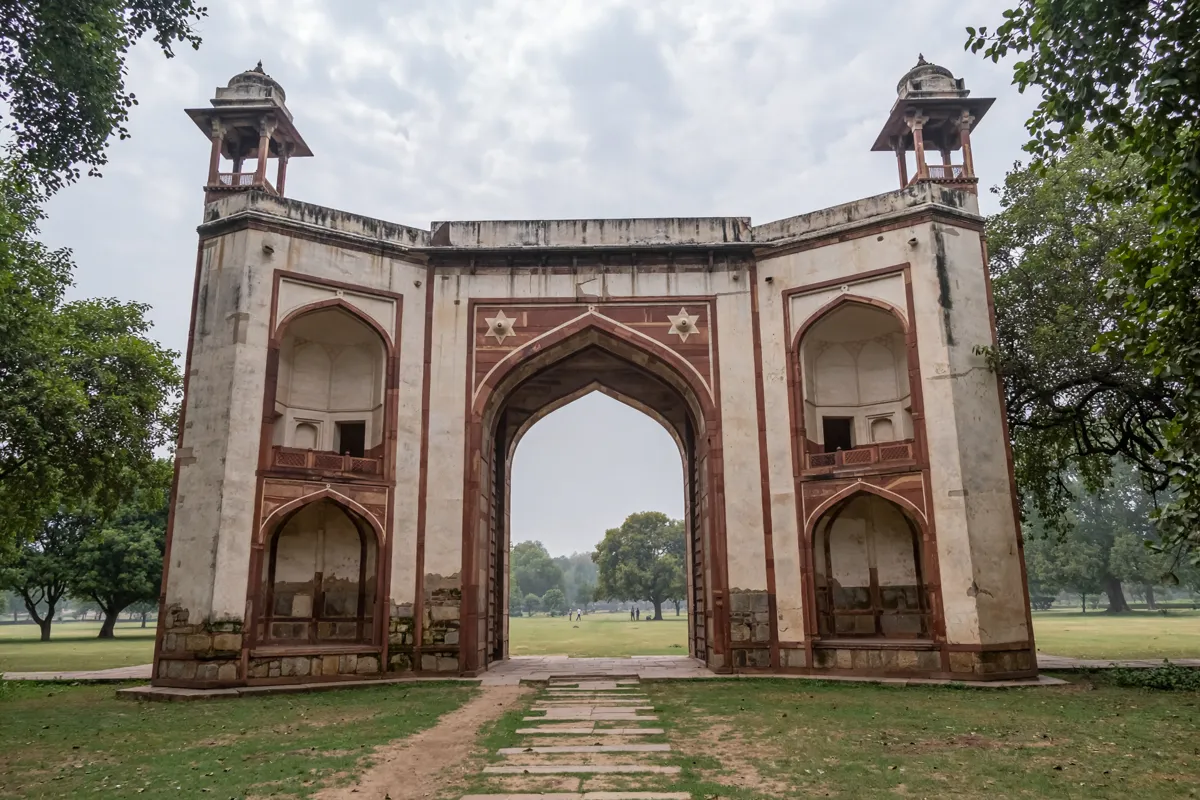
Where Arab Sarai sits in the heritage area
Arab Sarai sits within the wider heritage landscape around Humayun’s Tomb, with its gateway serving as the historic southern entrance to the sarai. The monument record places it in South Delhi, west of the Yamuna River.
The Aga Khan Historic Cities Programme describes the sarai as accommodation for 300 Persian craftsmen brought by Hamida Banu Begum on her return from pilgrimage to Mecca. They worked on Humayun’s Garden-Tomb. The gateway dates to 1627/1036 A.H.
For a closer look at the main mausoleum and its grounds, you can plan your visit with this guide to the Humayun’s Tomb Complex.
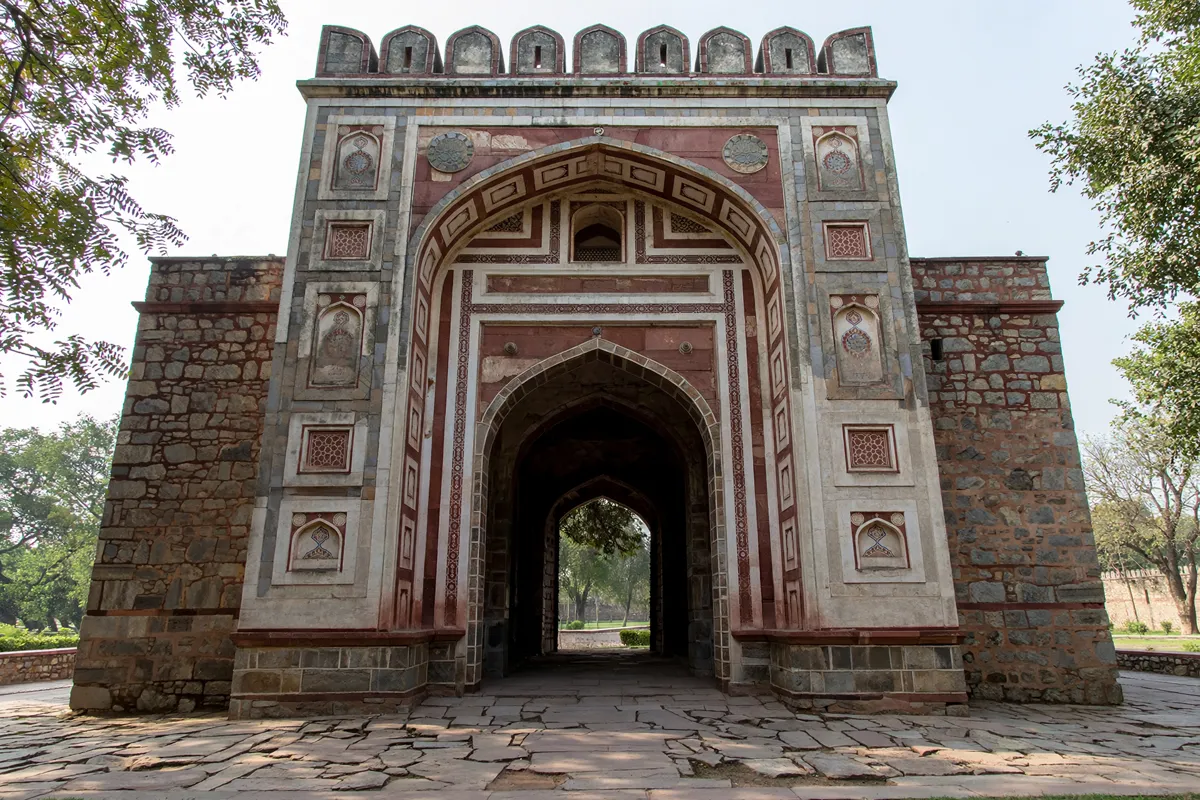
What to look for in the historic remains
The Gateway of Arab Sarai is the clearest feature to focus on: its arched entrance is topped by a battlement parapet. The monument record describes entrances opening into the sarai from the east, west and north, while the Aga Khan Historic Cities Programme identifies the gateway as the southern entrance.
A Government of India monument record says Mihr Banu, described in the record as Jahangir’s former mistress, added the gateways as entrances to a mandi, or market. The gateway was notified as a protected monument on 1 March 1913.
Conservation work on the gateway took place between 2012 and 2014. It covered the wooden doorway and stone façade, reconstructed a partly collapsed entrance chamber and upper chambers, conserved ground-floor chambers, and provided flooring. Master craftsmen used traditional materials, tools and building techniques.
How can you combine Arab Sarai with Humayun’s Tomb?
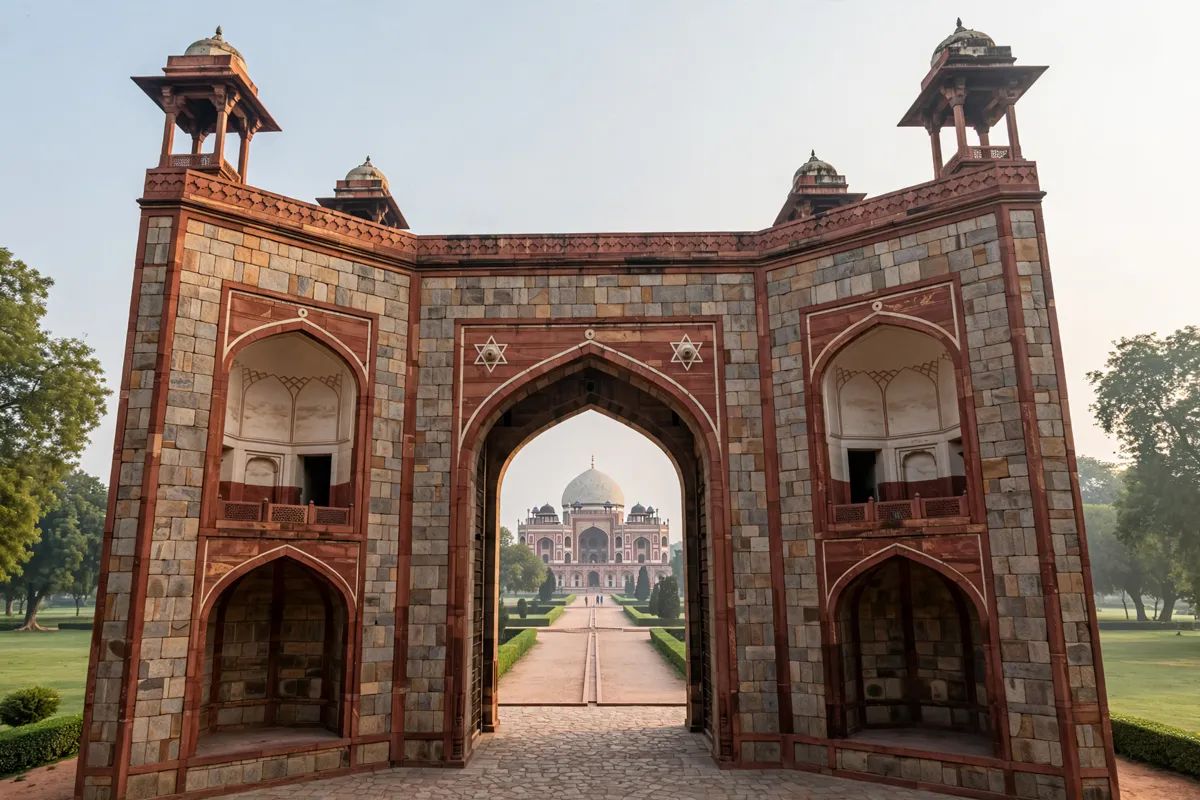
Pair the gateway with Humayun’s Tomb to connect the sarai’s history with the garden-tomb its craftsmen helped build. Delhi Tourism identifies a gateway view facing east toward Humayun’s Tomb, as well as another facing north toward Purana Qila.
For another nearby monument connected with the area’s history, the Tomb of Abdul Rahim Khan-i-Khanan can add a second stop to a heritage-focused outing.
Humayun’s Tomb stands at Mathura Road, Nizamuddin East, Delhi. The Delhi government gives its usual hours as 06:00 am to 06:00 pm every day, with entry fees of ₹30 per person for Indian citizens and ₹500 per person for foreign nationals. Video filming is listed at ₹25. The nearest metro stations are JLN Stadium and Jorbagh.
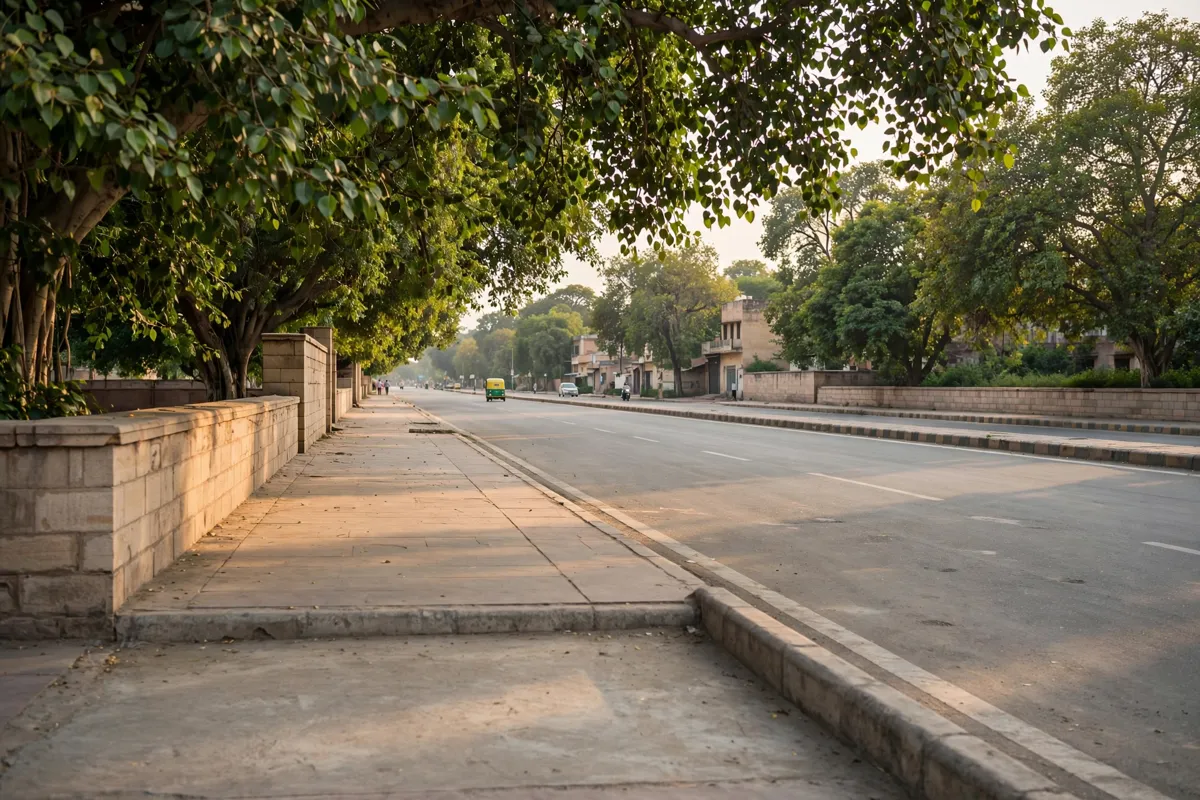
Getting there and checking access
The major portion of Arab Sarai is occupied by an Industrial Training Institute and is inaccessible to visitors, so plan around the gateway and the monuments you can visit in the surrounding area.
Delhi’s official filming-location list identifies three gateway views: facing east toward Humayun’s Tomb, facing north toward Purana Qila, and the remaining gateways. For opening hours, entry fees and access details, check the official site before you go; the Delhi government’s monument information is a useful source for Humayun’s Tomb.
FAQs
What is Arab Sarai?
Arab Sarai is a historic complex whose gateway served as its southern entrance. The sarai was built to accommodate Persian craftsmen who worked on Humayun’s Garden-Tomb.
Can you visit the whole Arab Sarai complex?
No. The major portion is occupied by an Industrial Training Institute and is inaccessible to visitors. The gateway is the main historic feature to focus on.
What is the connection between Arab Sarai and Humayun’s Tomb?
According to the Aga Khan Historic Cities Programme, Persian craftsmen housed at the sarai worked on Humayun’s Garden-Tomb. The gateway also has a view facing east toward Humayun’s Tomb.